LADS connects literature-based antenna reconstruction with parameter optimization. LEAM is its open-source modeling component. The paper demonstrates a CST workflow in which descriptions and figures become parameterized solids, executable macros, and an SB-SADEA optimization setup.
From literature to a simulation model
- 01Identify solidsInterpret descriptions and figures
- 02Define solidsDimensions
- 03Execute macrosBuild and check the CST model
- 04Optimize parametersConfigure and run SB-SADEA
The system includes 11 LLM tools. Its UWB example reconstructs a cross-slotted monopole, then changes the geometry to an H-slot and the substrate to Rogers RT 5880, with engineers selecting and reviewing the modifications.
Geometry and simulated response
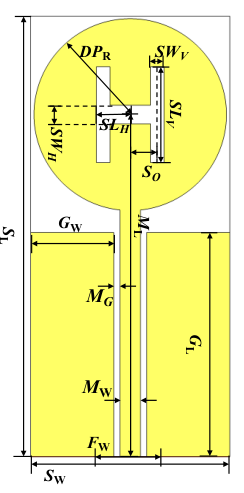
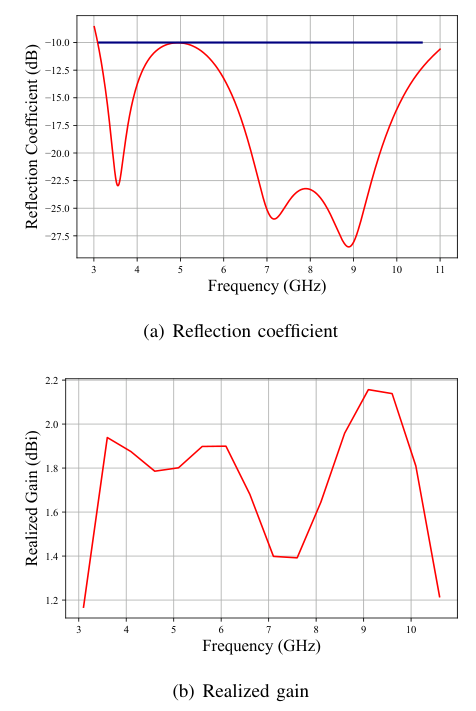
A feasible design was found after 256 evaluations. The optimization then continued to reduce gain variation while maintaining the gain level.
Paper and implementation
The published demonstration uses CST. The current LEAM toolkit also offers HFSS / PyAEDT modeling workflows; these extensions should be distinguished from the scope validated in the paper. Documentation.